
To Conserve Man
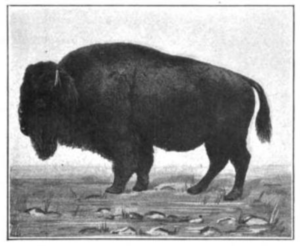 To our Rachel Carson-tuned ears, the word conservation means allowing nature to hold sway, to designate areas as wetlands, protected habitats and forever wild, to be humble and accept that nature is usually smarter than we are. But to biology textbook authors in the 1920s, 30s and 40s, influenced by the eugenic ideas of Henry Fairfield Osborn, Madison Grant, Theodore Roosevelt and others, conservation meant something else entirely. It meant first, preserving select symbols of American virility, like the redwood tree, the bison, and most importantly, their own “great race,” and second, managing the rest of nature – forests, water resources, wildlife, and soil – so that it could be exploited maximally without collapse.
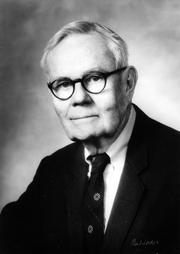 A visionary naturalist in the early 1940s on the order of Rachel Carson, by the 1960s, college biology professor Gairdner B. Moment devolved into a reactionary critic of the emerging culture of environmentalism he had helped spawn, and is remembered today as the scientist who wanted grizzly bears eliminated.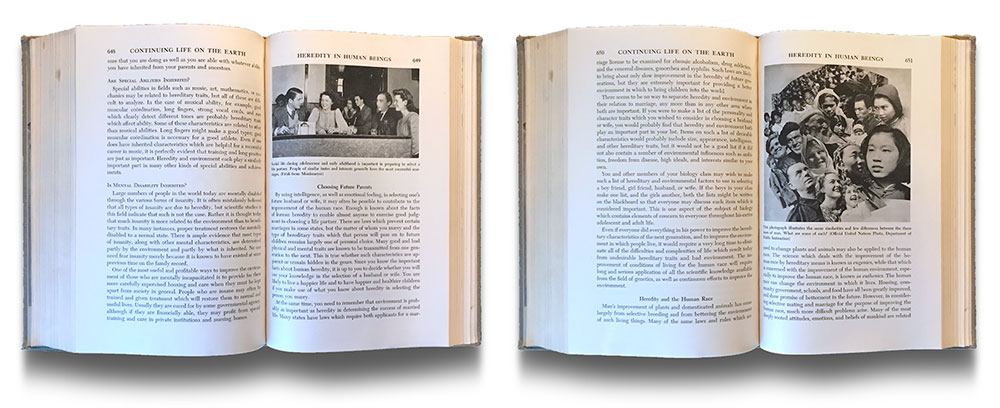
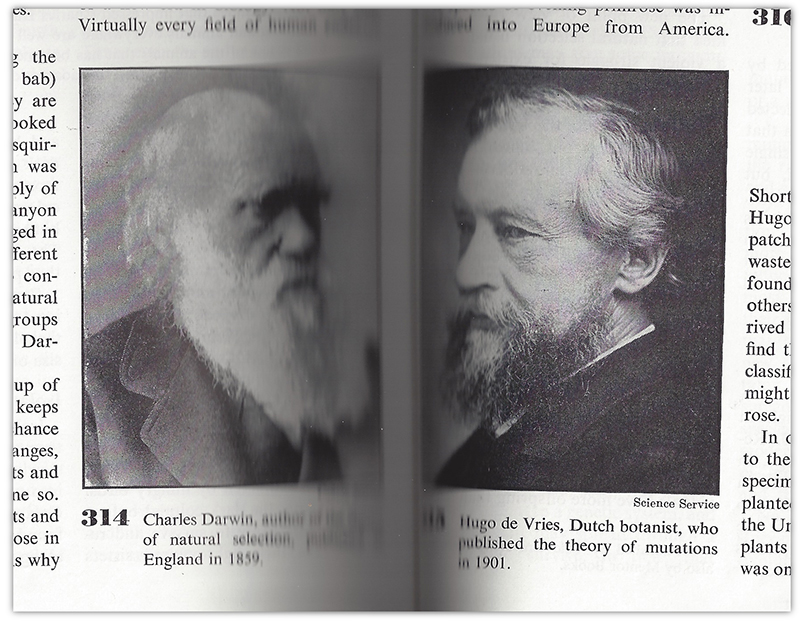 Dutch botanist Hugo de Vries gained global fame in the first decades of the twentieth century for being the guy who finally figured out how evolution worked. Today he is all but forgotten. Should he stay that way? Or are their good reasons to remember “dead end” scientific theories and the people who loved them?