A Degenerate in the Classroom: Alfred E. Neuman and the Textbooks He Hid Behind

MAD magazine was a rare treat when I was a young teenager, a little expensive and difficult to acquire on a regular basis, but a standard newsstand pickup ahead of road trips and summer weeks away. At the time, the early 1970s, MAD was hitting its highest circulation numbers. Yet its humor always felt weirdly out of step, recycled, even a bit reactionary. Of course that’s partially why I liked it. It was creepy anthropology, a moist record of the guilty id of my older siblings and younger aunts and uncles, subversive if a little toothless.

The magazine had its culturally relevant bits, like Don Martin’s ononmonpidic explosions and Sergio Aragones’ slapstick marginals, but on balance MAD was weighed down by filler of a sensibility that went out with Eisenhower.

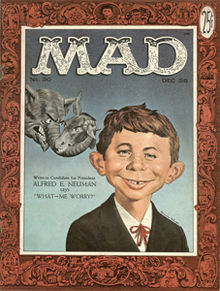
Then there was Alfred E. Neuman.

Database: Eugenics in College Biology Textbooks

TitleDateAuthor(s)PublisherEugenics 0-5 An Introduction to General Biology1904Sedgwick, William T. (M) MIT; Wilson, Edmund B. (M) ColumbiaHenry Holt and Company, New York0 No mention Biology1912Conn, Herbert William (M) WeslyanSilver, Burdett, Boston0 No mention The Principles of Biology1913Hamaker, J. I. (M) Randolph-Macon Woman’s CollegeP. Blakiston’s Son and Company, Philadelphia 0 No mention Biology1914Calkins, Gary N. (M) ColumbiaHenry…

Ellsworth Huntington’s Fantastic Stories of Racial Superiority and Relative Humidity

April 17, 2011 Ellsworth Huntington was one of the early twentieth century’s most prolific science writers. The author of 28 books, contributor to 29 others and author of more than 240 articles, [1] Huntington was a climatic determinist who held that geography was the “basis for history.” [2] Civilization according to Huntington owed its rise…

Biology’s Bomb: Graphing “Explosive” Population Growth in Cold War Textbooks

January 29, 2011 Prior to World War II, America’s protectors thought the country’s innocence could be guarded at its gates. Citizen biologists saw the nation’s border as kind of cartographic diaphragm, not entirely reliable in individual instances, but adequate to the task of containing the pool of potential breeders. But conflict had led to contact,…